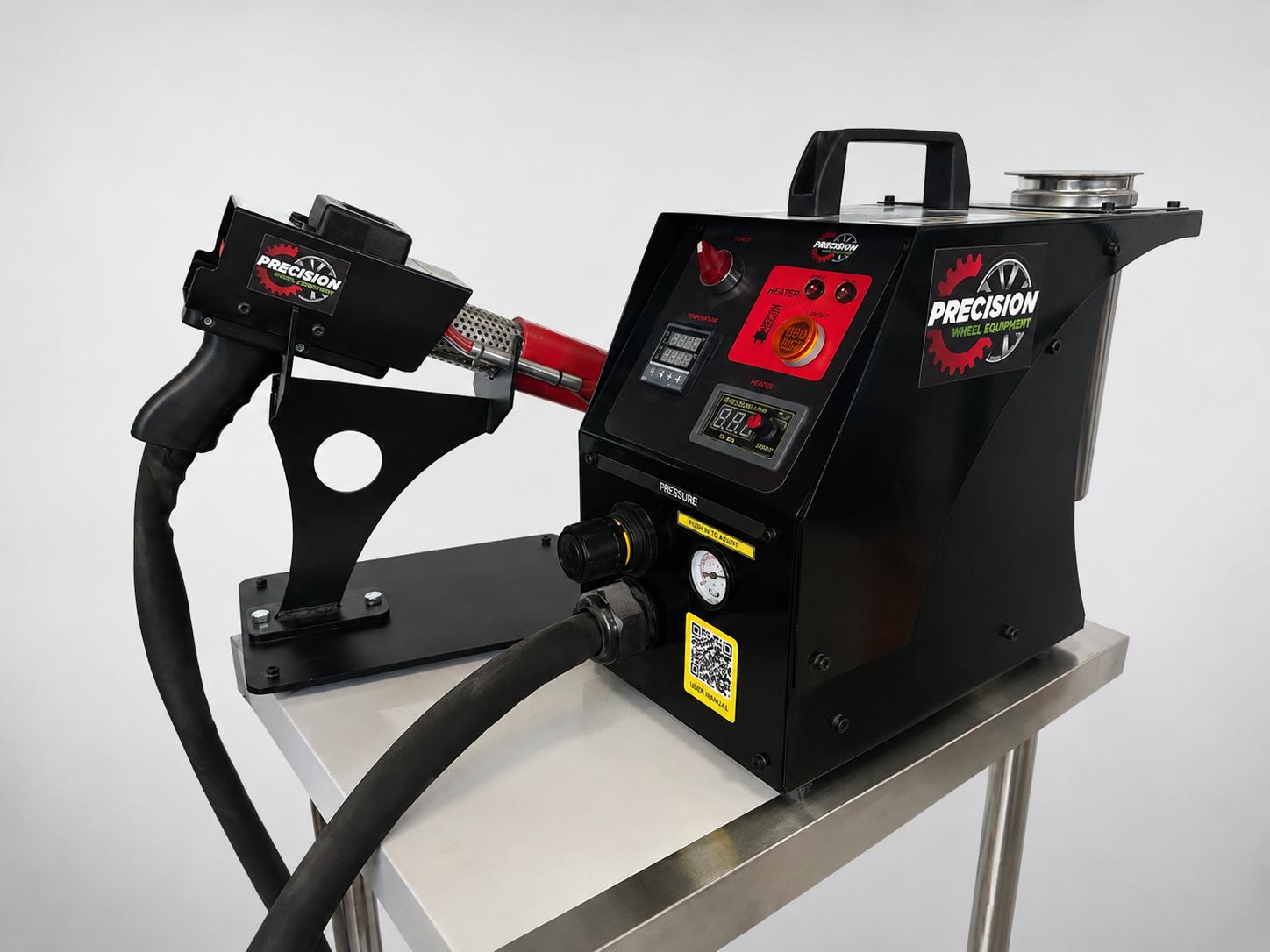
Download the TMC1_Thermo_Welder_Brochure
How It Works
1. Prepare — Thoroughly clean and prepare the damaged area.
2. Deposit — Apply compatible metal powder using controlled heat and compressed air.
3. Build Up — Gradually add material until the damaged area is restored.
4. Machine & Finish — Machine, grind and refinish the repaired area to the required shape.
Key Benefits
• Low thermal impact compared with conventional fusion welding.
• Reduced risk of distortion on suitable components.
• Rebuilds lost material rather than simply covering damage.
• Particularly useful for aluminum wheel refurbishment.
• Allows repaired areas to be machined back to specification.
• Suitable for localized scratches, gouges, wear and surface damage.
DO’S
Prepare the surface properly: Remove dirt, grease, paint, corrosion and oxidation.
Use the correct powder: Select a powder compatible with the substrate and application.
Follow correct settings: Use the manufacturer’s recommended temperature, air pressure, powder flow and technique.
Build material gradually: Controlled passes provide better material buildup and control.
Inspect the repair: Check the deposit before and after machining.
Follow safety procedures: Use appropriate PPE, ventilation and powder-handling procedures.
DON’TS
Don’t treat TMC as structural welding: It is primarily a surface restoration and material deposition process, not a universal replacement for TIG or MIG welding.
Don’t repair without inspection: Cracks, fractures, severe deformation or structural damage may require another repair method or replacement.
Don’t deposit onto contaminated surfaces: Poor preparation can compromise the repair.
Don’t use incompatible powders: Use materials recommended for the specific substrate and application.
Don’t guess operating parameters: Incorrect heat, pressure or powder flow can affect the deposit and final result.
Ideal Applications
• Aluminum wheel refurbishment
• Curb rash and gouges
• Deep scratches
• Localized corrosion
• Surface wear
• Restoration of lost material
• Rebuilding surfaces before machining
Restore. Rebuild. Refine. The quality of a TMC repair depends on correct preparation, powder selection, application, inspection and finishing. When used for suitable applications, TMC provides a controlled way to restore localized metal damage while minimizing thermal impact and preserving component geometry.
Important: Not every damaged component is suitable for TMC repair. Safety-critical components should be properly inspected and repaired according to applicable manufacturer, engineering and professional requirements.
Reviews
There are no reviews yet.